Tips for Numismatic Treasure Hunting in Flea Markets
Flea markets are unpredictable by design. That unpredictability is exactly why they attract numismatic treasure hunters. Coins with real historical or monetary value often appear far from glass cases and price tags. They sit in jars, mixed trays, or boxes labeled “old stuff.” Success in these environments depends less on luck and more on preparation.
Collectors who consistently find valuable pennies, quarters, or even antiques arrive with a plan. They understand what they are looking for, how value is created, and why certain coins get overlooked. Before stepping into a market aisle, it helps to build a mental framework that guides every decision you make at a vendor’s table.
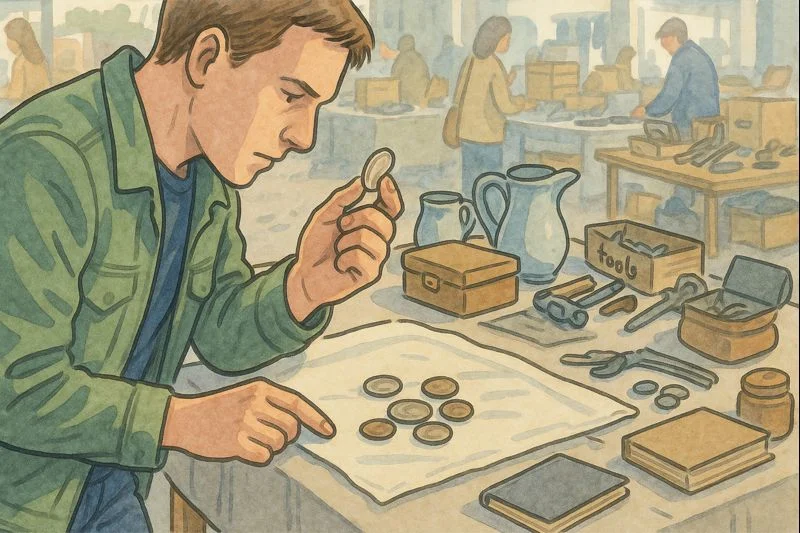
Learn What Creates Value in Coins
Not every old coin is valuable. Some are common survivors. Others are scarce because of low mintage, poor survival, or collector demand. Understanding this distinction changes how you search.
Focus on three fundamentals:
- Key dates and key mint marks: Certain years or mint locations are harder to find within a series due to limited production or circulation patterns. These pieces often carry premiums even in moderate condition.
- Condition and wear patterns: Coin grade plays a major role in value. Sharp details, clean surfaces, and original patina matter more than age alone. Coins with heavy wear or improper cleaning often lose appeal, even when rare.
- Varieties and subtle differences: Small changes in design, spacing, or strike strength can separate common coins from collectible ones. These details rarely stand out without deliberate inspection.
Authoritative references such as standard numismatic catalogs and educational material from established collecting organizations emphasize these same principles. They form the backbone of professional coin evaluation and are worth studying before any hunt.
Price Awareness Prevents Costly Mistakes
Flea markets encourage impulse buying. That works against collectors who lack pricing context. A basic sense of market ranges helps you avoid overpaying and recognize underpriced opportunities.
Before your visit, review recent sales data via the Coin ID Scanner App and general price guides for the series you plan to target. You do not need exact figures memorized. A rough range is enough to know when something deserves a closer look.
This preparation also helps during negotiation. Sellers respond differently when buyers speak with confidence and clarity.
Set a Strategy Before You Arrive
Walking into a flea market without focus leads to fatigue and missed details. A simple strategy keeps your attention sharp.
Effective collectors often:
- Choose one or two coin series to focus on per visit
- Set a spending limit in advance
- Plan extra time for bulk lots and mixed trays
- Accept that many visits produce learning, not purchases
Arriving early improves your odds. Vendors are more open, tables are less crowded, and fresh items appear before being picked over. A calm pace matters just as much. Rushing increases the chance of missing subtle features that define value.
Ask Questions and Listen Closely
Many flea market sellers are not professional coin dealers. Their knowledge varies widely. Asking respectful questions can reveal useful information about a coin’s source, how long it has been stored, or why it is being sold.
Sometimes the most valuable insight comes from casual conversation. Estate clear-outs, inherited collections, or unsorted storage boxes often contain coins that were never evaluated properly.
Patience pays here. Valuable coins often hide among ordinary items because no one took the time to look closely.
How to Inspect Coins at the Table
Once you step into the flea market, preparation turns into execution. This is where attention to detail matters most. Coins with real numismatic value rarely announce themselves. They blend in, often priced as ordinary items. Careful inspection and knowing where to look separate productive hunts from disappointing ones.
Flea market conditions are rarely ideal. The lighting is uneven. Coins are often dirty or mixed together. A consistent inspection routine helps you stay accurate despite these limitations.
Start with these steps:
- Check dates and mint marks first: This quickly filters out obvious commons and highlights years worth closer inspection. Even small mint mark differences can change scarcity.
- Use magnification: A loupe or phone macro lens reveals details that define value, such as doubled elements, repunched mint marks, or die wear.
- Study the surfaces: Look for original texture and natural wear. Scratches, corrosion, or harsh cleaning reduce desirability, even on scarce dates.
- Compare weights when possible: Differences in metal composition or striking errors often show up on a scale.
Avoid judging by shine alone. Many valuable coins appear dull or softly struck. What matters is originality and correct diagnostics, not brightness.
When scanning larger groups quickly, some collectors use tools like the coin scanner app to photograph coins and confirm basic details such as year range, country, composition, diameter, and typical market prices. This can help flag pieces that deserve deeper inspection later without slowing down the search.
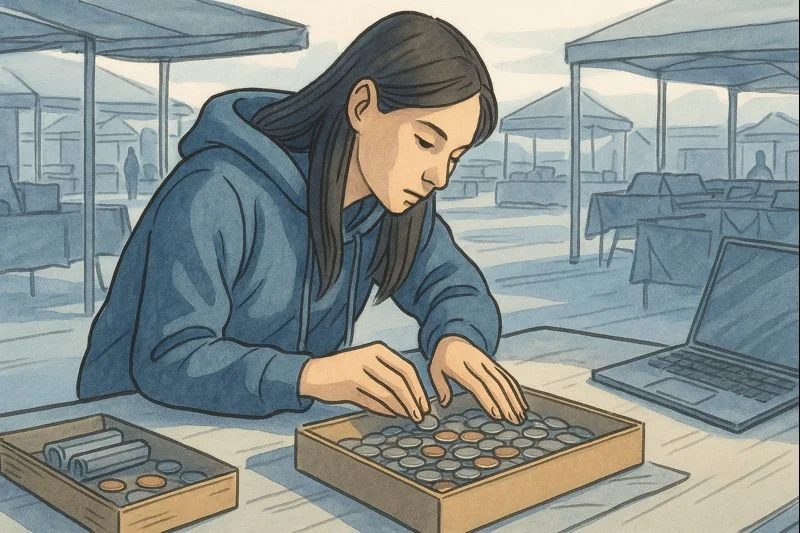
Where Overlooked Coins Tend to Hide
Many beginners make the mistake of visiting only tables labeled “coins.” Experienced collectors know better. Some of the best finds appear far from obvious displays.
High-potential spots include:
- Estate and household clear-out tables: Coins here often come from inherited collections with minimal evaluation.
- Mixed collectibles booths: Vendors selling stamps, postcards, or vintage toys frequently include old coins as side items.
- Bulk containers: Jars, bags, and boxes sold as mixed lots sometimes contain overlooked key dates or varieties.
- Underpriced trays: Coins grouped by denomination rather than date often hide better material.
Coins placed in these settings are less likely to have been examined closely. Sellers may price them based on appearance rather than numismatic merit.
Reading the Seller and the Situation
Understanding the seller’s background helps you decide how to proceed. Some vendors specialize in quick turnover. Others are clearing storage space. Their goals affect pricing and flexibility.
Watch for signs such as:
- Coins stored loosely without labels
- No protective holders or flips
- General pricing across all dates
- Limited knowledge of mint marks or varieties
These conditions increase the chance that value has been missed.
Practical Evaluation Table
| Inspection Step | What to Look For | Why It Matters |
| Date & mint | Scarce years, low mintage | Filters potential value |
| Surface | Original texture | Preserves collector demand |
| Details | Doubling, spacing | Identifies varieties |
| Weight | Metal consistency | Confirms authenticity |
This process keeps your decisions consistent and reduces guesswork.
Negotiation Without Burning Bridges
Finding promising coins is only part of flea market treasure hunting. The way you buy, review, and organize those finds determines how much long-term value you gain from each visit. Experienced collectors treat every purchase as part of a broader learning process, not a one-time win.
Flea markets invite negotiation, yet successful bargaining stays respectful and informed. Sellers respond better to calm confidence than aggressive tactics.
Effective approaches include:
- Start with facts: Point out condition issues, common dates, or bulk pricing norms rather than pushing for discounts without reason.
- Bundle purchases: Buying several items at once often leads to better pricing per coin.
- Use timing wisely: Late in the day, some vendors prefer selling at a discount rather than packing items away.
- Pay attention to tone: Friendly conversation builds trust and often opens the door to flexibility.
Avoid arguing over perceived rarity. If a seller believes a coin is special, it is usually better to move on unless the price already makes sense.
Reviewing Finds After the Market
The most important work happens at home. This is where flea market coins reveal their true potential.
A solid review process looks like this:
- Clean the workspace, not the coins: Never clean coins. Use good lighting and a stable surface instead.
- Reinspect with proper tools: Check details again under consistent light and magnification.
- Sort by outcome: Separate confirmed commons, potential upgrades, and coins needing deeper research.
- Document observations: Notes about strike quality, wear, or unusual features help refine your eye over time.
This step often turns “maybe” coins into clear keepers or confident pass-throughs.
Organizing for Long-Term Value
Organization protects coins and protects your progress. Even modest collections benefit from structure.
Useful habits include:
- Labeling coins with date, mint, and source
- Grouping by series or hunt location
- Tracking how often certain dates or types appear
- Reviewing past finds before future hunts
Digital tools can support this process. Some collectors use the Coin ID Scanner app to log coins into a digital collection after identification, making it easier to track finds across multiple flea market visits. Its collection management and smart filtering features help surface patterns that might otherwise go unnoticed.
Learning Through Community
No collector improves in isolation. Flea market finds become more meaningful when shared, discussed, and compared.
Ways to grow faster include:
- Visiting local coin shows to compare grading standards
- Joining online forums or regional collector groups
- Discussing finds with experienced hobbyists
- Reading auction results to see how similar coins perform
Community input often confirms suspicions or prevents costly mistakes. It also sharpens judgment faster than solo study alone.
Flea Markets as a Training Ground
Flea markets rarely deliver instant jackpots. Their real value lies in repetition. Each visit improves pattern recognition, inspection speed, and decision-making.
Over time, collectors learn to:
- Spot originality faster
- Ignore distractions
- Focus on specific opportunities
- Buy fewer coins with better outcomes
That discipline carries into every other part of numismatics.
Numismatic treasure hunting in flea markets rewards preparation, patience, and consistency. Coins with real value often sit quietly among ordinary objects, waiting for someone willing to look closer. By preparing in advance, inspecting carefully, negotiating smartly, and organizing responsibly, collectors turn flea markets into powerful learning environments—and occasionally, sources of genuine discovery.
Every hunt builds skill. Every skill sharpens the next hunt.
Flea markets are unpredictable by design. That unpredictability is exactly why they attract numismatic treasure hunters. Coins with real historical or monetary value often appear far from glass cases and price tags. They sit in jars, mixed trays, or boxes labeled “old stuff.” Success in these environments depends less on luck and more on preparation.…